Childhood Blindness
Childhood blindness affects children under 16 who have severe visual impairment or visual acuity of 20/200 or worse, even with corrective lenses. This means they can only see at 20 feet what someone with normal vision can see at 200 feet, making it impossible to read the top line of an eye chart even with glasses or contacts.
Children born with or developing blindness face lifelong challenges that impact their emotional and social development, as well as their families. Daily activities become difficult when vision is severely limited, affecting the child’s ability to navigate their environment and locate objects independently.
While childhood blindness may seem common, it is actually relatively rare, though accurate prevalence data remains challenging to obtain. Population surveys and rehabilitation program registries reveal significant disparities based on socioeconomic development. Low-income countries report approximately 1.5 cases per 1,000 children, while high-income countries average 0.3 per 1,000 children. These figures suggest approximately 1.4 million blind children worldwide, with three-quarters living in the poorest regions of Africa and Asia.
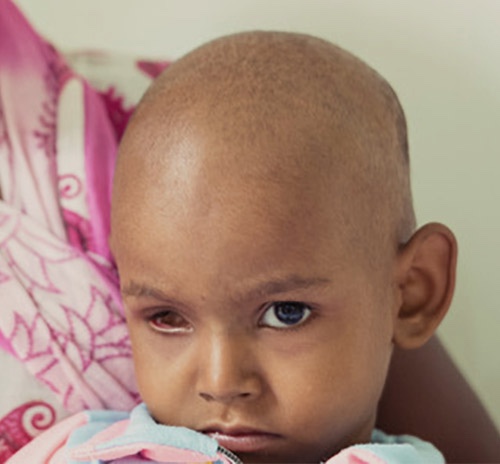
Recent research conducted by the International Center for Eye Health in collaboration with the World Health Organization identifies the retina as the most common site of visual impairment, affecting about 380,000 children. Surprisingly, unknown factors represent the leading cause of childhood blindness, accounting for 560,000 cases. Other documented causes include hereditary diseases and various perinatal, intrauterine, and childhood factors. Additional affected areas include the cornea, lens, optic nerve, and other ocular structures.
Many causes of childhood blindness are preventable or treatable when identified early. Conditions like glaucoma and retinopathy of prematurity can be managed to prevent vision loss, while cataracts and certain corneal scarring cases can be treated to restore sight. Corneal scarring represents the most significant cause of preventable childhood blindness and can be avoided through comprehensive maternal and child healthcare, health education, proper nutrition, access to essential medications, clean water, sanitation, disease control, and treatment of common conditions.
Prevention efforts continue expanding through technological advances, including specialized visual aids and high-tech glasses for visually impaired individuals. The World Health Organization coordinates international initiatives to reduce visual impairment through policy development, strategic planning, and global monitoring. Children with blindness benefit from vision aids, daily living skills therapy, motor skills training, and orientation and mobility instruction to maximize their independence and quality of life.